
Savannah Cat Behavior
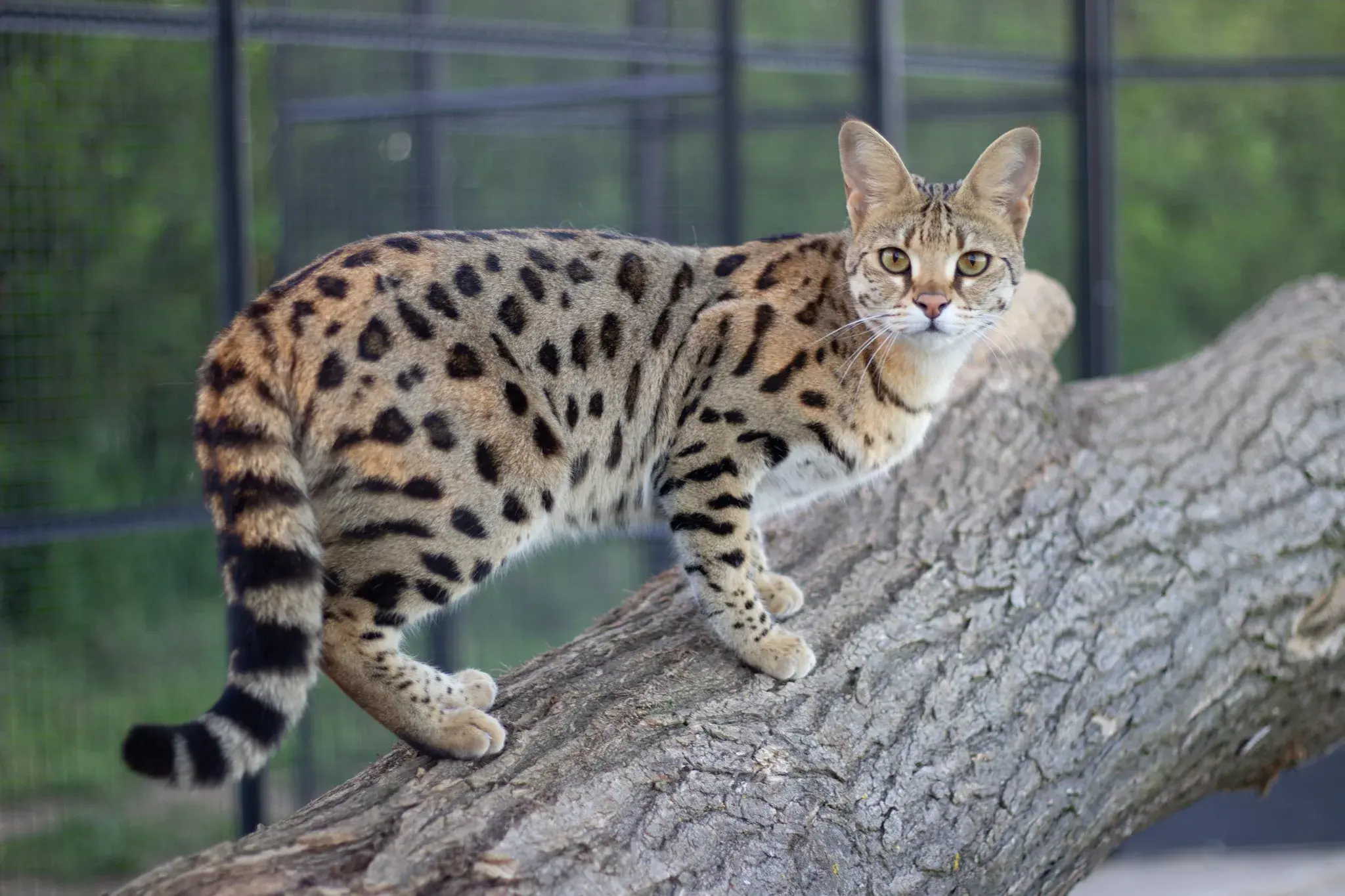
Savannah cats, a hybrid breed resulting from crossing domestic cats with the African wild serval, are gaining popularity due to their exotic appearance, lively energy, and personality. Their wild ancestry gives them distinctive physical and behavioral characteristics that require specific care and understanding: an inclination for climbing and spacious environments, predatory instincts, litter box needs, solitary tendencies, and preferences in toys. 🐾
Climbing and space needs
Savannah cats, a unique blend of domestic felines and the African wild serval, possess certain distinct physical and behavioral characteristics due to their wild ancestry. Among these, climbing is an essential part of their daily routines. Climbing is intrinsic to Savannah cats, as their ancestors were accustomed to living in trees. African servals often climbed trees to hunt or escape predators. As a result, Savannah cats inherit a powerful desire to climb, jump, and perch up high.
By providing plenty of climbing opportunities, owners can meet their physical and mental needs. Regular climbing allows Savannah cats to exercise their muscles, improve their agility, and stimulate their senses. They particularly enjoy climbing up and down tall scratching posts, cat trees, and shelves. Additionally, giving them elevated spots such as windowsills and perches can help them feel safe and comfortable.
Predatory instincts
Savannah cats inherit strong predatory instincts from their serval ancestors, making them skilled hunters in their own right. In their natural habitat, servals are known for their remarkable ability to catch small creatures such as rodents, birds, and insects. Similarly, Savannah cats display impressive hunting skill, using their exceptional speed, agility, and sharp claws to stalk, chase, and catch their prey. Despite the fact that their usual prey weighs less than 220 grams, these agile felines can even go after creatures nearly their own size, weighing between 4 and 5 kilograms.
Understanding and managing their hunting instincts matters for the safety of other pets and family members. Early socialization plays a vital role in teaching Savannah cats to interact peacefully with others. Gradual introductions to new animals, combined with close supervision of their behavior, help foster positive relationships. Positive-reinforcement training methods are effective for establishing desired behaviors and reducing potential risks linked to their hunting instincts.
To provide appropriate outlets for their hunting drive, owners should offer interactive toys that mimic prey. Engaging in play sessions with feather wands or small moving objects satisfies their natural hunting instincts while redirecting their energy in a safe, controlled way. By providing adequate mental and physical stimulation, owners can effectively satisfy Savannah cats’ predatory instincts while maintaining a harmonious environment for everyone.
Litter box training
Training a Savannah cat to use the litter box can be a challenging task due to their distinctive traits and behaviors. As a hybrid breed with wild ancestry, Savannah cats have a powerful instinct to mark their territory, which makes litter box training more complicated compared to other domestic cats.
Here is a step-by-step guide to help with the litter box training process:
Choose the right litter box
Opt for a large, sturdy litter box that gives your Savannah cat enough space to move around comfortably and dig. Choose a box with low sides for easy entry, especially for kittens or cats with mobility issues. Consider having an extra litter box if you have multiple cats.
Select the right litter
Choose an unscented, non-clumping litter that is gentle on your cat’s paws and doesn’t produce strong odors that could discourage it from using the box. Savannah cats have a sensitive sense of smell, so it’s important to use a litter that won’t irritate them.
Find the ideal location
Place the litter box in a quiet, accessible, and private spot in your home. Cats prefer privacy when using the litter box, so avoid busy areas or noisy places that might frighten them.
Introduce your Savannah cat to the litter box
Gently introduce your cat to the litter box by placing it inside shortly after meals or when you notice signs that it needs to eliminate, such as scratching the ground or showing restlessness. Let it explore the box and dig in it.
Encourage positive associations
Encourage your Savannah cat to associate the litter box with positive experiences. You can do this by offering treats, praise, or gentle petting immediately after it has used the box correctly. Positive reinforcement helps strengthen the desired behavior.
Maintain a clean environment
Keep the litter box clean and free of waste. Scoop out droppings at least once a day and remove any soiled litter. Replace the litter regularly and clean the box with a mild, unscented soap to avoid odors that could discourage your cat from using it.
Respond appropriately to accidents
If your Savannah cat has an accident outside the litter box, avoid punishment as it can create negative associations. Clean up the mess quickly and thoroughly using an enzyme-based cleaner to remove any lingering scent that could attract it back to the same spot.
Troubleshooting
If your Savannah cat continues to have accidents or avoids using the litter box, consider potential reasons such as stress, health issues, or the litter box itself. Make sure the box is easily accessible, the litter is changed regularly, and there are no underlying health issues. Consult a veterinarian if problems persist.
Remember, patience and consistency are key when litter box training. Every cat learns at its own pace, so be prepared for trial and error. With time and positive reinforcement, your Savannah cat will understand and adapt to proper litter box use.
If you have multiple cats, make sure each cat has its own litter box to avoid territorial conflicts. Overall, training a Savannah cat to use the litter box requires patience and consistency. By providing a clean litter box, using positive reinforcement, and promptly addressing accidents, you can successfully train your Savannah cat to use the litter box.
Solitary nature
Savannah cats tend to have a solitary lifestyle, particularly in the F1 generation. They may not socialize easily with other cats in the household and require a slow, careful introduction process to new feline companions.
It is important to give cats enough time to gradually get used to each other’s presence. Start with scent introductions, where they can become familiar with each other’s smells without direct contact. Then move on to supervised face-to-face interactions, allowing them to build a sense of comfort and familiarity. This gradual approach helps reduce the risk of conflict and promotes harmonious integration.
In addition to socialization with other cats, owners should prioritize providing a variety of toys and engaging activities to keep their Savannah cats mentally stimulated. Interactive toys that encourage hunting and stalking behaviors, such as puzzle toys and those that mimic prey, are especially appreciated. These toys engage their natural instincts and provide an outlet for their energy.
To prevent destructive behavior and alleviate boredom, regularly rotate toys and introduce new ones periodically. This keeps the play experience fresh and exciting for Savannah cats. Investing in climbing structures, shelves, and perches also gives them opportunities to explore and exercise their agility, contributing to their overall well-being.
By understanding and respecting their solitary tendencies while providing engaging activities and toys, owners can ensure their Savannah cats lead a fulfilling and enriched life.
Toy selection
Savannah cats are an active, intelligent breed, and they need adequate mental and physical stimulation to stay healthy and happy. Therefore, choosing the right toys for your Savannah cat plays a crucial role in keeping them entertained and allowing them to satisfy their natural instincts.
Savannah cats prefer toys that stimulate their hunting and stalking instincts. This includes interactive puzzle toys and toys that mimic prey. They also enjoy toys that let them climb, jump, and play, such as cat trees, scratching posts, and feather wands.
Choose toys that are safe for your Savannah cat. Avoid toys with small detachable parts or those made from harmful materials. To keep their interest and prevent boredom, regularly rotate your cat’s toys.
Dietary needs
Savannah cats have slightly different dietary needs than other domestic cats due to their wild serval ancestry. They need a diet rich in quality protein to support their active lifestyle. Commercial cat foods, preferably those specifically formulated for active breeds, can meet these nutritional needs. Some owners also opt for a raw diet, which more closely mimics what Savannah cats would eat in the wild. However, if you decide to feed your Savannah cat a raw diet, it is crucial to do so under veterinary supervision to ensure nutritional balance.
Whatever diet is chosen, maintain a regular feeding schedule and appropriate portions to avoid overfeeding and obesity. Remember, treats should be given sparingly and should not make up more than 10% of their total daily caloric intake.
Socialization and training
Savannah cats are known for their intelligence and social nature, traits inherited from their serval ancestry. These cats thrive on human interaction and can be trained to perform various tricks and tasks, much like dogs. They respond well to positive-reinforcement training techniques, where good behaviors are rewarded with treats or affection.
Here is a socialization method suited to Savannah cats, designed for beginners:
Start early
- Begin the socialization process as early as possible while your Savannah cat is still a kitten. Young kittens are more receptive to new experiences and can adapt more easily to different environments and interactions.
Safe space
- Create a safe, comfortable space for your Savannah cat where it can retreat when it feels overwhelmed or needs solitude. Provide a cozy bed, toys, and a litter box in this area. This will help it build a relationship of trust and confidence, knowing it has a secure place to go when needed.
Gradual exposure
- Introduce your Savannah cat to different people, sounds, and environments gradually. Start with calm, familiar individuals, such as family members or close friends, before gradually exposing them to new faces. Make sure these interactions are positive, gentle, and non-threatening.
Treats and rewards
- Use positive-reinforcement techniques to associate social interactions with rewards. Offer treats, praise, or gentle petting when your Savannah cat shows calm, relaxed behavior during socialization sessions. This will help them associate positive experiences with socializing.
Controlled environment
- Initially, keep socialization sessions in a controlled, calm environment to reduce stress. Slowly introduce new experiences, such as gentle handling, different surfaces to explore, or new sounds. Monitor your cat’s reactions and move at its pace. If it shows signs of fear or discomfort, pause and reassure it before continuing.
Play and bonding
- Engage in interactive play sessions with your Savannah cat using toys that encourage hunting and chasing behaviors. This will help strengthen the bond between you and provide positive experiences during play. It also channels their energy and stimulates their natural instincts.
Positive associations
- Associate positive experiences with new people and environments. For example, invite trusted people to offer treats or play with your Savannah cat. Gradually expose them to different areas of your home and let them explore at their own pace.
Patience and consistency
- Socialization takes time and patience. Be consistent in your efforts, but also respect your cat’s limits. Never force interactions or overwhelm them with too much stimulation at once. Respect their need for personal space and independence.
Remember, every cat is unique and the socialization process can vary. Observe your Savannah cat’s reactions and adjust your approach accordingly. If you encounter difficulties or concerns, consult a veterinarian or a professional animal behaviorist who can provide guidance and support throughout the socialization process.
Territorial nature
Savannah cats have a strong territorial nature, resulting from their wild serval ancestors. As a result, they have a natural instinct to establish and mark their territory, displaying behaviors that indicate ownership and boundaries. A common behavior is pheromone marking, where Savannah cats use their scent glands to leave pheromone signals on objects and surfaces, communicating to other animals that the area has been claimed. Additionally, Savannah cats may rub against furniture or people, as well as scratch surfaces to leave their scent and visually mark their territory.
To address their territorial instincts, owners should provide appropriate outlets for these behaviors. For example, having sturdy, tall scratching posts or cat trees allows Savannah cats to engage in territorial marking through scratching, preventing them from targeting furniture or walls. Providing several strategically placed litter boxes throughout the home also helps satisfy their territorial needs. Keep these litter boxes easily accessible and clean, as a dirty or cluttered litter box can lead to inappropriate elimination behaviors.
High energy and play
Savannah cats are known for their high energy level and playful behavior. Their active nature comes from their wild heritage, inherited from serval ancestors who are agile hunters. Offer them plenty of opportunities for exercise and play to keep them physically and mentally stimulated.
Interactive play sessions channel their energy and satisfy their natural hunting instincts. Toys that mimic prey, such as feather wands or small moving objects, capture their attention and encourage active play. Puzzle toys and treat-dispensing toys also provide mental stimulation, since Savannah cats must solve the puzzle to get their reward.
Creating an enriching environment
Set up climbing structures, shelves, and perches where they can climb, jump, and explore. Introducing new toys and rotating them regularly prevents boredom and keeps their interest. Set aside dedicated playtime each day to give them the exercise and mental stimulation they need. Savannah cats thrive in homes that embrace their active nature and provide ways to meet their physical and mental needs.
Behavioral differences between Savannah cats of different generations
Savannah cat behavior can vary depending on the generation they belong to. First-generation (F1) Savannah cats, which have one serval parent and one domestic cat parent, tend to display behaviors closer to those of their wild ancestors. They may have a higher energy level, greater independence, and a strong hunting drive. Their behavior may resemble that of their serval ancestors, with a tendency to climb, jump, and explore their environment.
First-generation Savannah cats may need more space and mental stimulation to satisfy their natural instincts.
Second- (F2) and third-generation (F3) Savannah cats, as the generations progress, see the influence of serval ancestry decrease, resulting in slightly more moderate behavioral traits. Second- and third-generation Savannahs may show a balance between their wild instincts and their domestic adaptability. They may still have a good amount of energy and curiosity, but they can be more adaptable to life in a domestic environment.
These generations often show increased sociability with other pets and family members, making them better suited to households seeking a balance between a Savannah cat’s exotic appearance and a more domesticated temperament.
It is important to note that these are generalities and individual Savannah cats may display behavior that doesn’t match these descriptions. Factors such as socialization, environment, and the influence of specific parent cats can also affect a Savannah cat’s behavior, regardless of its generation.
To summarize, first-generation (F1) Savannah cats tend to have a higher energy level and behavioral traits closer to their wild ancestors. Later generations (F2, F3, etc.) show more moderate behavioral traits and increased adaptability to domestic life. However, each Savannah cat, regardless of generation, should be assessed and understood based on its individual personality and the environmental factors around it.
Learn more about Savannah cat generations.
Conclusion
Understanding Savannah cat behavior helps you provide the appropriate care and environment for this hybrid breed. Their wild heritage gives them distinctive traits that require special attention: satisfying their need to climb, managing their predatory instincts, litter box training, and understanding their solitary tendencies. Choosing toys suited to their needs, considering their specific dietary requirements, and providing proper socialization all support their well-being.
Be patient, consistent, and attentive in your approach, and consult a veterinarian or animal behaviorist if you have specific questions or concerns.